Showing posts with label uses. Show all posts

Sunday, September 29, 2024

Popular Apple Varieties and Their Uses

There are many types of apples, each with distinct traits suited to various tastes and purposes. Here are some popular varieties:
  • Fuji: Hailing from Japan, Fuji apples are celebrated for their sweet flavor and crunchy texture. They are ideal for eating fresh and also work well in salads and baking.

  • Gala: These small to medium-sized apples have a sweet, mild flavor and a juicy, crisp texture. They are perfect for snacking and adding to salads.

  • Granny Smith: Noted for their bright green skin, Granny Smith apples are tart and firm. They are excellent for baking, cooking, and providing a zesty kick to salads.

  • Honeycrisp: Renowned for their exceptional crunch and balanced sweet-tart taste, Honeycrisp apples are great for fresh eating, salads, and they also hold up well in baking.

  • Red Delicious: Featuring a sweet, mild flavor and a softer texture, Red Delicious apples are best enjoyed fresh but are not suited for baking due to their softness.

  • Golden Delicious: With a sweet, rich flavor and a tender texture, Golden Delicious apples are versatile for fresh eating, baking, and cooking.

  • Braeburn: Braeburn apples offer a balanced sweet-tart flavor and a firm texture, making them suitable for fresh eating, baking, and cooking.

  • Pink Lady (Cripps Pink): Known for their crisp texture and sweet-tart taste, Pink Lady apples are excellent for eating fresh and adding to salads.

  • McIntosh: McIntosh apples have a juicy, tender texture and a tart flavor. They are good for eating fresh and making applesauce.

  • Jonagold: A hybrid of Jonathan and Golden Delicious, Jonagold apples have a sweet-tart flavor and a crisp texture. They are versatile for fresh eating, baking, and cooking.

Each apple variety offers distinct characteristics that make them suitable for different culinary uses, whether for fresh eating, baking, or cooking.
Popular Apple Varieties and Their Uses

Sunday, December 04, 2022

Barbados cherry: Applications and nutritional benefits

Barbados cherry fruit grows on a large shrub or tree with a short trunk. Commonly they are between 6 and 20 feet in height. The flowers, which appear throughout the summer, are pink or rosy, 2 cm (nearly one inch) in diameter, and grow from the leaf axils in clusters of three to five. Each tree produces up to 62 pounds of cherries that offer a sweet-to-tart flavor profile.

The fruits are very rich in vitamin C and are used in preserves and commercial vitamin production. Because of their intense red coloring, Barbados cherries are often used in jellies and jams; alcoholic beverages such as wine; desserts such as ice creams, pies and popsicles; syrups; and sauces. In the Caribbean and some parts of South America, Barbados cherries are enjoyed fresh eaten right off the tree.

For dessert use, they are delicious merely stewed with whatever amount of sugar is desired to modify the acidity of the particular type available.

Barbados cherries incorporated into more than just food, it is also in creams, lotions and skin care products, as they remain quite popular in the beauty industry.

One single fruit comprises the minimum daily recommended vitamin C requirements and also are low in calories.

Barbados cherry is very nutritious. And has the following benefits:
*Very high in Vitamin C
*Good amounts of calcium, iron, niacin, phosphous, riboflavin, and thiamine
*Rich with antioxidants
*Fight infections and viruses
*Boost immune system

The fruits are considered beneficial to patients with liver ailments, diarrhea, and dysentery, as well as those with coughs or colds.

And due to its high level of antioxidants, Barbados cherry can reduce inflammation and oxidative stress, boost immunity and has been shown to boost collagen production and reverse skin damage from aging.
Barbados cherry: Applications and nutritional benefits

Wednesday, January 19, 2022

The uses of chayote fruit

Chayote (Sechium edule (Jacq.) Swartz) is also called vegetable pear, mirliton, chocho or custard marrow, is a vegetable and a member of the Cucurbitaceae family. It is mainly produced as a non-traditional export crop.

Chayote is basically used for human consumption, not just in the Americas but in many other countries. The consumption of the fruit is much appreciated using conventional cooking methods, such as simply boiled or used in stews and desserts, whereas the peel and leaves are usually poorly consumed, presenting however promising health properties, such as a diuretic or kidney stones dissolving capacity.

In Mexican and Latin American households and restaurants, the fruit may be boiled, baked, stuffed, mashed, fried, scalloped, or pickled, but the main method of consumption is in a broth. In some cases it can be eaten raw in salads and salsas.

Chayote have a crisp texture when raw, and a very mild flavor. They can be peeled, cut into cubes (after removing the central seed and seed area), and used as summer squash – steamed or cooked in side dishes.

In France, chayote fruit is served as a substitute for artichoke hearts. In Jamaica and Puerto Rico, the matured fruit are halved, boiled, and served; the seeds are also consumed. In New Zealand, chayote is preserved in the same manner as dill pickles.

In India, chayote is eaten together with other vegetables in a curried dish. In India, as in the Americas, the fruit and roots are not only used as food but also as fodder for cattle. In southeastern Asia, chayote is consumed similarly to French fries.

The softness of the fruit flesh makes it particularly suitable for giving consistency to baby foods, juices, sauces and pastes. Moreover, chayote has been processed into jams, sweet and pickles and sauce, to be used as a substitute for apple in pies and tarts.

Additionally, chayote starch is a good substitute for wheat flours in diverse products, which can be used by people with special nutritional requirements, such as those with celiac disease.

Medicinal use of chayote has also been documented in the literature. Data compiled in recent studies highlight the use of decoctions made from the leaves or fruits to relieve urine retention and burning during urination or to dissolve kidney stones, and as a complementary treatment for arteriosclerosis and hypertension.
The uses of chayote fruit

Friday, February 02, 2018

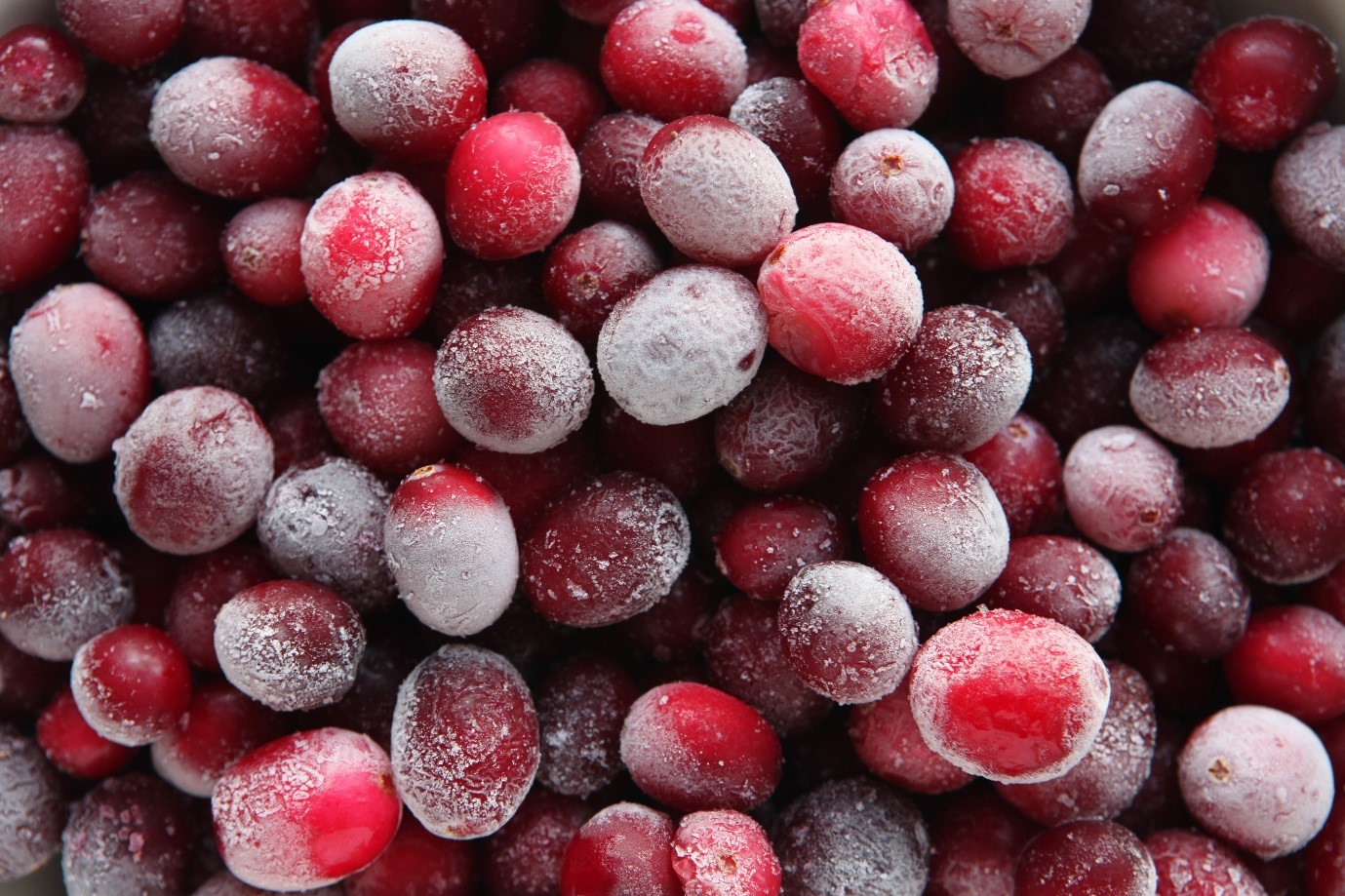
Frozen cranberries

Cranberries are among the simplest fruits to judge and keep. A bright red berry is a fresh berry, packed with flavor.

If frozen, cranberries will keep for several years. To freeze them there is also a specific procedure: first spread the fresh cranberries on a cookie set sheet and place the sheet in the freezer. After a couple of hours, the frozen berries will be ready to be transferred into a freezer beg and stored safely.

In factory large quantities of cranberries are frozen for later processing into sauces, jelly and juice. Frozen cranberries is also good for baked goods, cooked sauce and compotes and smoothies and shakes. Frozen cranberries maintain good quality and have a relatively long shelf-life.
Frozen cranberries

Saturday, May 14, 2016

The uses of raisins

Raisins didn’t become popular in Europe until the 11th century when knights returning home from the Crusaders brought raisins back with them from the Mediterranean and Persia.

Raisins are one of the most popular types of dehydrated foods products. Raisins are dried fruit of various kinds of grapes that contain considerable sugar and are cured in the sun or in an oven.  As a dried fruit, they are a concentrated source of calories and nutrients, including vitamin B6, copper, iron, magnesium, manganese, phosphorus, potassium and thiamin.

They are also high in dietary fiber and have no cholesterol. Today, raisins are made similarly the world around. The grapes are handpicked and spread in rows between the vines to dry in the sun. Their bloom – the coating of natural yeast that cling to all grapes – remains intact and the dried grapes turn almost black.

Raisin can be eaten as a snack, either alone or mixed with nuts and either dried fruits. They are stirred into yoghurt, added to cereal and oatmeal, used in breads and cakes.

Like other fruits, raisin should be washed thoroughly before they are used. They may then be soaked in warm water and stewed in exactly the same way as prunes.
The uses of raisins

Friday, May 22, 2015

Bael fruit

The genus Aegle is one of the three monotypic general with deciduous leaves (Poncirus and Feronia are the other two) in the orange subfamily Aurantioideae.

Bael fruit is very hardy, subtropical, deciduous tree that can thrive in various soil-climatic conditions and can tolerates alkaline soil, and is not injured by temperatures as low as -7 ° C. The fruit is usually harvested when the peel turns yellowish green and the stem separates easily from the fruit.

Bael pulp is commonly eaten fresh after removal of mucilaginous seed or made onto sherbet and beverages; however it is also made into syrup and toffee.

Beating the seeded pulp together with milk and sugar makes a popular drink called sherbet in India.

Bael fruit has been widely from time immemorial for processing in the mature green form to prepare preserves. In order to prepare preserves, the hard rind of the fruit is removed by a special strong knife.

The fruit’s medicinal value is very high when it just begins to ripen. The fruit is aromatic, cooling and laxative. It arrests secretion or bleeding.

The unripe of half-ripe fruit is good for digestion. It is useful in preventing or curing scurvy. It also strengthens the stomach and promotes its action.
Bael fruit

The Most Popular Posts