Showing posts with label watermelon. Show all posts

Sunday, June 08, 2025

The Health Benefits of Watermelon

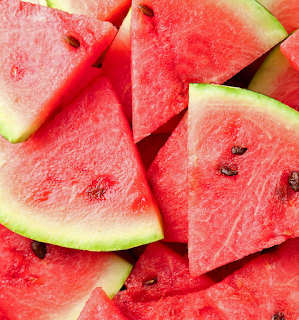
Watermelon, beyond its delicious taste and refreshing nature, offers a plethora of health benefits supported by scientific research. Recent studies have shed light on its remarkable properties, making it more than just a summer treat.

One of the key findings highlights the presence of Lycopene in the red variety of watermelon. Lycopene is a potent antioxidant known to reduce the risk of various diseases. It works by neutralizing harmful free radicals in the body, preventing them from oxidizing cholesterol and thereby reducing the risk of heart attacks and strokes. This antioxidant effect extends to protecting against asthma attacks, osteoarthritis, rheumatoid arthritis, and colon cancer.

Moreover, watermelon contains beta-carotene, another beneficial plant compound classified as a carotenoid. Carotenoids are highly pigmented molecules that protect plants from sunlight damage. In humans, these compounds contribute to overall health by combating oxidative stress and bolstering the immune system.

Recognizing these benefits, the American Heart Association includes watermelon as part of a sensible diet low in saturated fats and cholesterol, emphasizing its heart-healthy qualities.

The global appeal of watermelon is also intriguing. While it's a prized commodity in some countries, like Japan where it's presented as a cherished gift (known as Suika), its culinary uses are diverse and imaginative. Beyond the juicy flesh, all parts of the watermelon are edible—the rind can be transformed into sweet pickles, and the seeds, when baked and salted, offer a nutritious snack.

In Mexico, watermelon takes the form of "Agua Fresca," a beloved beverage appreciated for its hydrating and revitalizing properties. With over 50 varieties of watermelon available, the market boasts a range of juices, some of which are expertly blended with complementary flavors.
The Health Benefits of Watermelon

Wednesday, December 08, 2021

Watermelon: High content of lycopene

Study shows that watermelons has numerous health benefits. The red variety of watermelon contains high concentrations of Lycopene, an anti-oxidant that helps to reduce the risk of many diseases.

Majority of the watermelon is being sold on the basis of sweetness but presently, ruby color imparted by lycopene is also a convincing factor.

Lycopene, a red-pigmented carotenoid with antioxidant activity has been associated with a lowered risk of prostate, digestive tract, bladder, breast and cervical cancers, as well as with cardiovascular disease.

The lycopene activity in the body depends on its molecular and physicochemical properties and site of action within cells. It acts as singlet oxygen and free radical quencher.

It has been observed that consumption of 20 mg/day of lycopene from fresh frozen watermelon juice, resulted in a 100 to 200% increase in human plasma lycopene, thus showing that lycopene is bioavailable from non-heat processed watermelon.
Watermelon: High content of lycopene 

Tuesday, February 25, 2020

Cultivation of watermelon

Watermelon is now widespread in all tropical and subtropical regions of the world and is mostly grown for fresh consumption of the juicy and sweet flesh of mature fruit. Watermelons require long, warm growing periods. Bright, hot days (27 – 35°C) and warm nights (16-21°C).

Watermelon is propagated by seed. In general, seed rate of 2-3 kg/ha for small-seeded type and 4-5 kg/ha for large seeded type is sufficient.

Watermelons grow best on non-saline sandy loam or silt loam soils. Light-textured fields warm up faster in the spring and are therefore favoured for early production.


Fine sands produce the highest quality melons when adequate fertilizer and water are provided. Windbreaks are advisable on sandy soils to reduce “sand blast” damage and stunting of young seedlings caused by spring winds.

Water deficits during the establishment of watermelons delay maturity and may cause gaps in production. Water stress in the early vegetative stage results in reduced leaf area and reduced yield. Sandy soils may require more frequent, lighter applications than heavier soils to prevent moisture stress. Irrigate the field before dibbling the seeds and thereafter once a week. Irrigation should be given at regular intervals of time. Irrigation after a long dry spell results in cracking of fruit.

Days to maturity: It is usually 80 to 90 days for baby bush varieties and 90 to 100 days or more for the larger varieties.
Cultivation of watermelon

Friday, June 24, 2016

Health benefits of watermelon

The fruit is an annual vine belonging to the squash and melon family. There are more than 50 varieties, including seedless watermelons. Watermelon is not only great on a hot summer day; this delectable thirst – quencher may also help quench the inflammation that contributes to conditions like asthma, atherosclerosis, diabetes, colon cancer and arthritis.

Nutritionists have long appreciated the health benefits watermelon provides, particularly as a good source of vitamins A and C, as well as fiber.

The nutrient content of a slice of raw watermelon that 1 in, thick in diameter without refuse (480 g), is: 152 calories; protein, 3 g; carbohydrate, 34.6 g; fiber, 2.4 g; fat, 2.1 g; iron, 0.82 g; potassium, 560 mg.

Watermelon is also a source of the potent antioxidant, lycopene. Research has shed new light on watermelon’s health benefits due to high concentrations of lycopene, an antioxidant that may help reduce the risks of cancer, cardiovascular disease, and other chronic disorders.

The juicy flesh may be red, orange, yellow or white. Watermelon is sweet tasting and perfect for snack, dessert or picnic.
Health benefits of watermelon

Thursday, March 03, 2016

Fruit of watermelon

Watermelon, Citrullus lanatus is a frost tender, vining annual crop with sweet-tasting fruit that is often consumed as a cool desert.

The composition of watermelon per 100 g edible portion (50-70% of the mature fruit) is: water 91.5 g, energy 134 kJ (32 kcal), protein 0.6 g, fat 0.4 g, carbohydrate 7.2 g, Ca 8 mg, P 9 mg, Fe 0.17 mg, thiamine 0.08 mg, riboflavin 0.02 mg, niacin 0.2 mg, folate 2 mg, ascorbic acid 9.6 mg.

Watermelon is served fresh as slices, as chunks, as juice, pickled rind, gale candy, and as edible seeds (harvested from confectionary type cultivars).

It is no longer just a summer fruit and is becoming an everyday fruit like apples, bananas and oranges.

Worldwide the yield of watermelon averages about 25 t/ha, varying from 5-60 t/ha, depending on cultivar and cultural practices.

Watermelon varieties are separated by seeded and seedless, types, then by rind color, shape, size and flesh color. There are at least 1000 named watermelon varieties, some of these originating 50-80 years ago still planted.
Fruit of watermelon

The Most Popular Posts