Showing posts with label pomegranate. Show all posts

Saturday, June 25, 2022

Antioxidant activity of pomegranate

Pomegranates are widely cultivated in Iran, India, and the Mediterranean countries such as Turkey, Egypt, Tunisia, Spain, and Morocco.

Pomegranate juice is a good source of fructose, sucrose, and glucose. It also has some of the simple organic acids such as ascorbic acid, citric acid, fumaric acid, and malic acid. Pomegranate juice has become more popular because of the attribution of important biological actions.

Pomegranate fruit contains many phenolic compounds including flavonoids-anthocyanins, and other complex flavanoids and hydrolysable tannins (punicalagin, gallic and ellagic acid), which are compounds with high antioxidant activity that may offer beneficial health properties.

The antioxidants in fruits are a substance can help reduce levels of reactive oxygen species (ROS), a type of free radical, in the body. Free radicals may play a part in cancer, heart disease, stroke, and other diseases of aging.

Free radical is an unstable molecule made by the process of oxidation during normal metabolism. The free radical concentration level increases under certain circumstances e.g., environmental stress, wounding and pathogen attack, and can damage the living organisms when left unchecked. Exposure to toxins, such as tobacco smoke, can also increase ROS levels.

High levels of ROS can lead to oxidative stress, resulting in cell damage and inflammation. Oxidative stress may contribute to metabolic disease, cancer, and other health issues. Antioxidants help remove ROS from the body.

Pomegranate juice and peel have catechins with a high antioxidant activity. They are essential compounds of anthocyanin's production with antioxidant and inflammatory role. All pomegranate flavonoids show antioxidant activity with indirect inhibition of inflammatory markers such as tumor necrosis factor-alpha.
Antioxidant activity of pomegranate

Wednesday, March 16, 2022

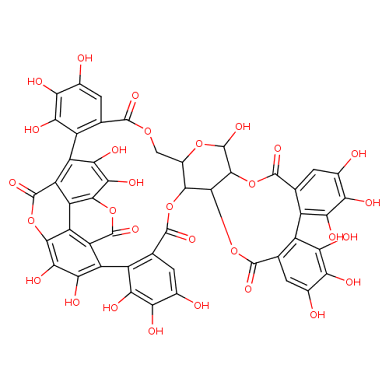
Phenol punicalagin in pomegranate

Pomegranate, botanically known as Punica granatum, is an edible fruit enriched with a valuable substances with high antioxidant capacity.

Pomegranate is a rich source of many phenolic compounds including ellagitannins (punicalagin, punicalin, pedunculagin, gallagic acid, ellagic acid, ellagitannin and gallotannins), anthocyanins (cyanidin, delphinidin and pelargonidin glycosides), flavonoids (quercetin, kaempferol and luteolin glycosides).

These pomegranate phenolic compounds have several health-promoting effects such as antioxidative, anti-inflammatory, antimicrobial, antidiabetic, and antitumor properties.

Around 92% of pomegranate antioxidant activity comes from hydrolysable tannins. Epidemiological studies have shown that reduced cancer mortality and cerebrovascular and cardio disease are associated with consumption of phenolic-rich fruits.

Punicalagin is an ellagitannin, a type of hydrolysable tannin, is the largest molecular weight and most abundant polyphenol known. Punicalagin is reported to have anti-inflammatory, anti-cancer and anti-atherosclerotic properties.

Punicalagin is found in α and β forms in plants of the genera Myrtales such as Terminalia catappa, Terminalia myriocarpa and Punica granatum (pomegranate).
Phenol punicalagin in pomegranate

Saturday, September 04, 2021

Pomegranate in ancient world

Pomegranate are originated from central Asia. Pomegranate has an important place in the ancient cultures of the Mediterranean countries. It was cultivated in ancient Egypt and in early Greece and Italy. The fruit which was described by the Greek botanist Theophrastus about 2350 years before the present (BP) and is mentioned in many Greek and Turkish myths.

Edible pomegranates were firstly reported to be cultivated in Iran during 3000 BC. It was recorded that pomegranate cultivation in about 2200 B.C comes from the ancient civilization of Sumer, located in the lower Tigris and Euphrates valley, approximately the area of present-day Basra, Iraq. It is believed that the pomegranate was brought into the area by people who were migrating from the Zagros Mountains— on the present-day Iran and Iraq border.

Phoenicians established Mediterranean Sea colonies in North Africa and brought pomegranates to Tunisia and Egypt by 2000 BC. The Phoenicians were great traders who sent many ships to ports in the Mediterranean Basin.

During that time, pomegranates also naturalized around the world and reached China by 100 BC over the Silk Road.

It was probably introduced into Greece and the areas surrounding the Mediterranean Sea, as far west as Spain and Portugal by ancient sailors and traders.

Ancient traders in Central Asia and the Middle East referred to the pomegranate as the “fruit of paradise.” Arabian caravans carried the fruit with other trade goods and spices, as well as the water and food they transported to provision the travelers.

Cultivation of the pomegranates in the Roman Empire and Spain is estimated to be in 800s. It was introduced in the Indian Peninsula from Iran during the 1st century AD and was found growing in Indonesia in 1416 AD.

The Spanish sailors brought pomegranates to the New World and some missionaries introduced pomegranate in Mexico and California. The first clear evidence that the pomegranate was in the area to become the United States was in the early 1700s, when they were grown in Spanish Florida and English Georgia.
Pomegranate in ancient world

Friday, November 24, 2017

What are health benefits of pomegranate fruit?

Punica granatum L., the pomegranate tree is an important commercial fruit in Saudi Arabia, the United States and many Mediterranean countries.

Pomegranate fruit has long been esteemed as food and medicine, and is a diet in convalescence after diarrhea.

Pomegranate seeds are bursting with nutrients, this due to large part of particularly potent antioxidant polyphenols. Pomegranate can help with skin care issues including age sport, dry skin, pigmentation, and acne break-outs. It also has compounds that protect the skin against free radical damage, helping to prevent skin cancer and reliving sunburn.

The fruit juice and extract also slow down the wear and tear of DNA, a major contributing factor to aging.

The phenol punicalgin is responsible for more than 50% of the juice’s potent antioxidant activity. It appears that pomegranate juice has higher levels of punicalgin because the rind is used in its production.
What are health benefits of pomegranate fruit?

Sunday, January 26, 2014

History and origin of pomegranate

Human use of pomegranate has a long history, with cultivation projected as early as 3000 BC.

The cultivation of the pomegranate began in the ancient culture of Northern India, particularly the Indus Valley, adjoining Persia and ancient Bactria.

The seeds have been a Hebrew symbol of fertility since biblical times, and the fruit once formed part of the decoration on the pillars of King Solomon’s temple. The Bible notes that King Solomon has large a planting of pomegranates. 

The pomegranate was introduced to the Mediterranean as far west as Spain and Portugal from western Asia by ancient sailors and traders. It was introduced from Carthage to ancient Rome. The fruit is one of the symbols of the love goddess Aphrodite, is central to the Greek myth of Persephone.

In classical Latin, the fruit was known either as Malum punicum or Malum granatum.

In the 16th century, Spanish missionaries brought the plant to the New World. It is mainly grown in California and Arizona.
History and origin of pomegranate

Saturday, January 26, 2013

Pomegranate

The pomegranate was called ‘Apple of Carthage’ or ‘Malum Punica’ by Pliny, the ancient Roman author of Natural History.

Pomegranate fruit (Punica granatum L) belongs to punicaceae family. The name is derived from Latin word pomum (apple) and granatus (seeded). Pomegranate is a very popular fruit all over the Middle East. The fruit is round and approximately the size of a small orange. The pomegranate is native to the Middle East and was later grown in the Mediterranean.

Pomegranate come from a small tree with a height of eight to ten feet. It has highly branched leaves that smooth and oblong, measuring two to three inches long, often axillary.

The fruit, more or less round in shape, 6.25 – 12,5 cm in diameter, has a course, leathery rind with a link to deep red or indigo to fully red color.

Pomegranate grows well in semiarid, mild temperate to subtropical climates and is naturally adapted to regions with cool winters and hot summers.

Modern scientific testing has shown that pomegranate actually has some contraceptive effects. The fruit stimulates the production of hormone that can actually reduce fertility.
Pomegranate

The Most Popular Posts