Showing posts with label melon. Show all posts

Sunday, January 02, 2022

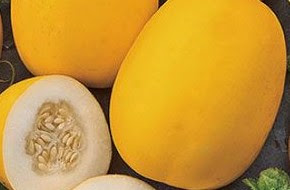
Vine peach (mango melon) – The history

There has been suggestion that these melons seem to have originated in China or ancient Egypt (or both) since 2,000 BC from recorded evidence and travelled over the Silk Road through trade and migration to wind up in Turkey. Nevertheless, based on genetic studies, crossing attempts with other Cucumis species, and world distribution of melon varieties, that the origin of melon appears to be Africa.

Carbonized melon seeds were also discovered in eastern Iran and dated to ca. 2000 BC. The domestication process of melon started in Egypt around 2000 BC. From this area, melon dispersed throughout the Middle East and Asia, where a secondary domestication and diversification development may have occurred. Indo-Aryans knew about Cucumis melo before coming to Indian subcontinent from central Asia in 2000 BC.

A travelogue description indicates the presence of sweet melons in Khorasan and Persia by the mid-10th century. Agricultural literature from Andalusia documents the growing of mango melons there by the second half of the 11th century, which probably arrived from Central Asia as a consequence of Islamic conquest, trade and agricultural development.

There is some discussion as to how they arrived in America, as William Woys Weaver shows Samuel Wilson, a seedsman in Mechanicsville (Bucks County), Pennsylvania, offered seed in the Farm Journal in February of 1889.

Another source shows they were first described in 1849 by Charles François Antoine Morren, a Belgian botanist and horticulturist, as well as the Director of the Jardin botanique de l’Université de Liège in the early to mid-1800s. He apparently obtained his trial seed from Cuba and brought them to Belgium for study.

The name Cucumis melo was introduced by Linnaeus (1753) for domesticated plants cultivated in Uppsala, Sweden. Morphologically similar wild-collected plants were later described from Africa, Asia, and Australia under multiple different names for each continent, but all were subsequently synonymized with and thus included in C. melo.

In 1859, the French botanist Charles Naudin using mostly living plants grown in the gardens of the Natural History Museum of Paris, proposed the first useful system of infraspecific categorization for C. melo L. Naudin (1859) subdivided this species into ten groups, which were later revised by Munger and Robinson (1991), proposing trinomial name.

The vine peach became a well-known commercial variety in Europe soon after, where it might have come to America. Regardless of how vine peach arrived, in the early 20th century it was being commercially grown for pickled foods and preserves.
Vine peach (mango melon) – The history 
Wednesday, December 08, 2021

Yubari King melon

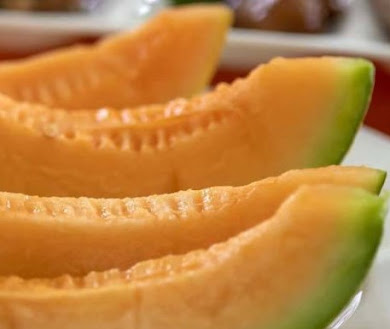
The melon has a raised rind netting over a yellow-skinned background, orange fresh and a musky aroma.

Yubari King melon cultivar was first created in 1961 by crossing 2 cultivars known as Spicy Cantaloupe and Earl's Favorite. They are grown in the city of Yubari on the island of Hokkaido. It is the most expensive melon in the world.

Yubari King melons are protected by geographical indication, making them an exclusive product. It can fetch the price $45,000 on auction but a standard melon sells for between $50 (R550) and $100 (R1 100) in Japanese department stores.

The fruit is grown only inside greenhouses, as opposed to mass farming. Fruits are round with a netted texture. Fruits ripen with a few days of harvest, turning from greyish green to greenish yellow. The flesh is orange color. The fruit has a unique syrupy-sweet taste, delicate, juicy texture, and unusual skin pattern reminding of ancient porcelain vases.
Yubari King melon

Monday, July 06, 2009

Melons

Melons
Melons belong, as do squash, to the cucumber.

There are to general types, the cucumis species, which includes muskmelon, cantaloupe and honeydew melons and the citrullus species, including the watermelon and the Chinese watermelon.

There are numerous varieties of melon.

Although they may be grown in almost any of the 50 states, except possibly Alaska, cucumis species require warm weather for good growth and 75 – 130 days from planting to harvesting; therefore, most are grown commercially in the southern states.

The citrullus species are grown in the South, but can also be grown those northern states where 130 – 140 days of growing weather prevail. In warmer climates, about 85 days are required from planting to maturity.

Melons are planted as seed but may be started in greenhouses or hot frames and set out as plants.

Melons do not improve in flavor after harvesting, hence, are picked when fully ripe.

Care must be taken to prevent bruising during harvesting and handling. Melons are mostly handled as the fresh product.

At packing plant, melons are washed, drained, dried and shipped to retail markets in wooden crates.

Melons are not preserved by drying. Some melons are frozen as melon balls.

In preparations for freezing, the melons are halved, the seeds are removed. And the melon meat is removed in ball-shaped pieces.

The melon balls are washed with sprays of water drained and filled into liquid-tight cartons and covered with syrup (25-30% sugar), and the cartons are sealed.

This product is frozen and stored at 0 degree F or below until shipped to the retailer.

Frozen melons should be held at 0 degree F or below until sold to the consumer. Some melons used in the production of fresh fruit salad.
Melons

The Most Popular Posts